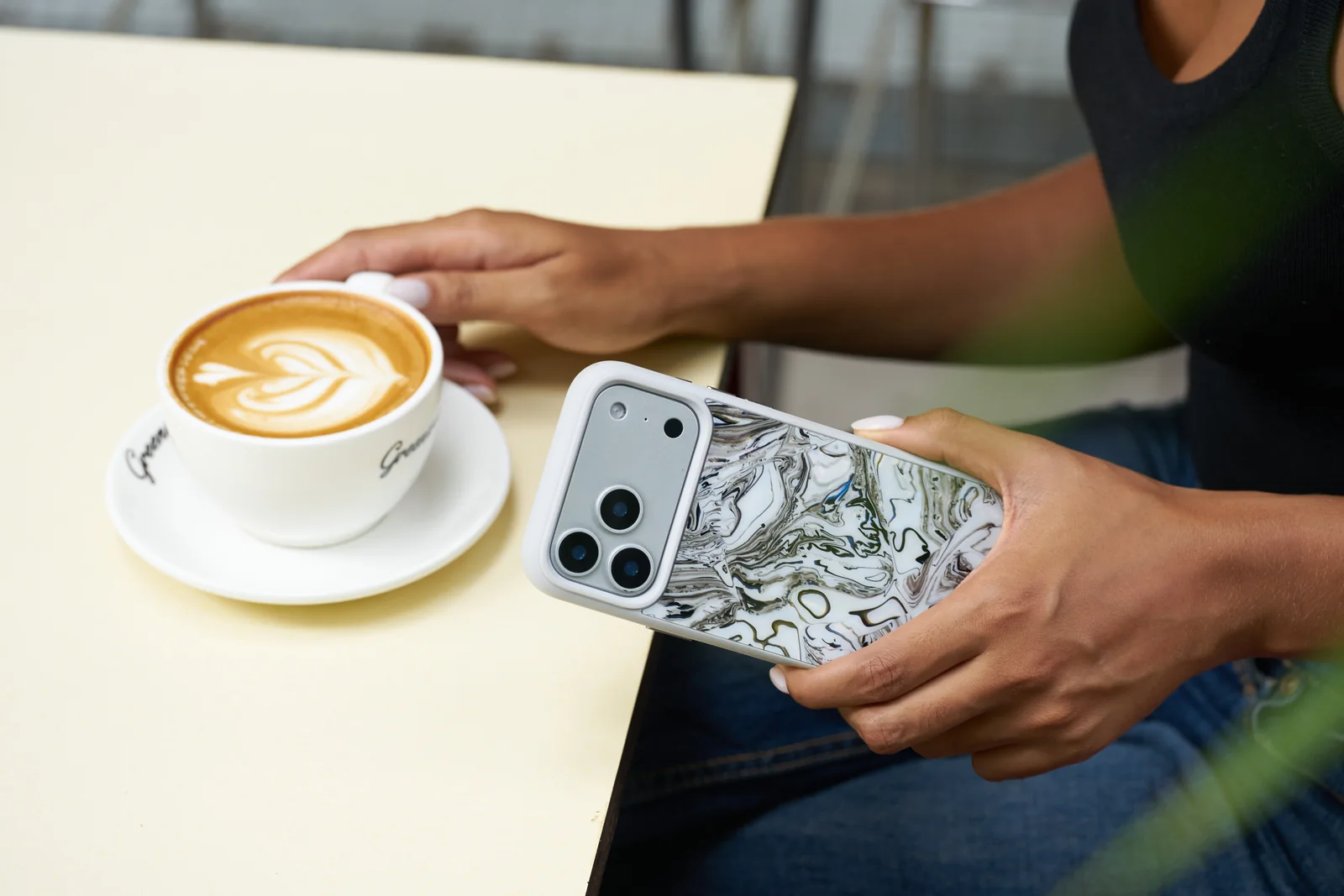
You meet a case at its edges. Taking a phone from a pocket, finding a control and resting it in your hand are small interactions, repeated throughout use. They give us concrete questions to ask before we reach for a score.
Follow the perimeter
Look at the transition from back to side, the shape around the screen and the way the case meets the camera area. Describe what is visible and identify where any measurement was taken. A raised edge is a geometric observation; its protective performance needs a separate test.
Use the actual controls
A control can look neat in a photograph and still need checking on the device. Our proposed process records access, intended gestures and any changes observed with the case installed. For features such as Camera Control, a simple photograph of the cover does not tell the full interaction story.
Reference: Apple accessory design guidance.
Make texture visible
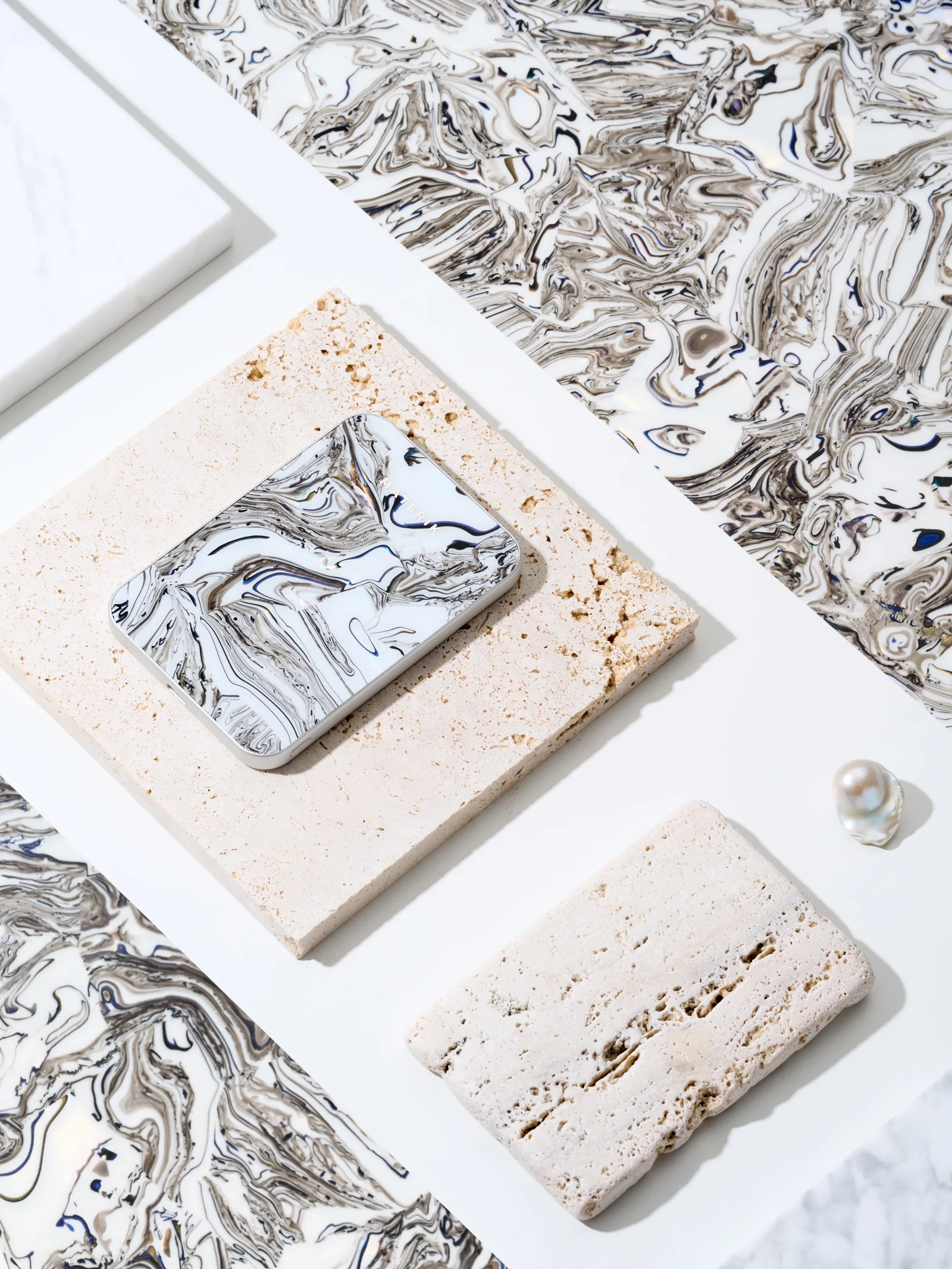
A macro image can show a pattern, a join or a surface change. Side lighting and a consistent viewpoint make those details easier to compare. It cannot tell the reader exactly how an object will feel, so a future use review should separate the photograph from the writer's observed experience.
Come back after use
A fresh sample and a used sample answer different questions. A diary can record handling, pocket use, cleaning, surface changes and the actual time involved. That record is more useful than implying months of experience from an afternoon with a product.