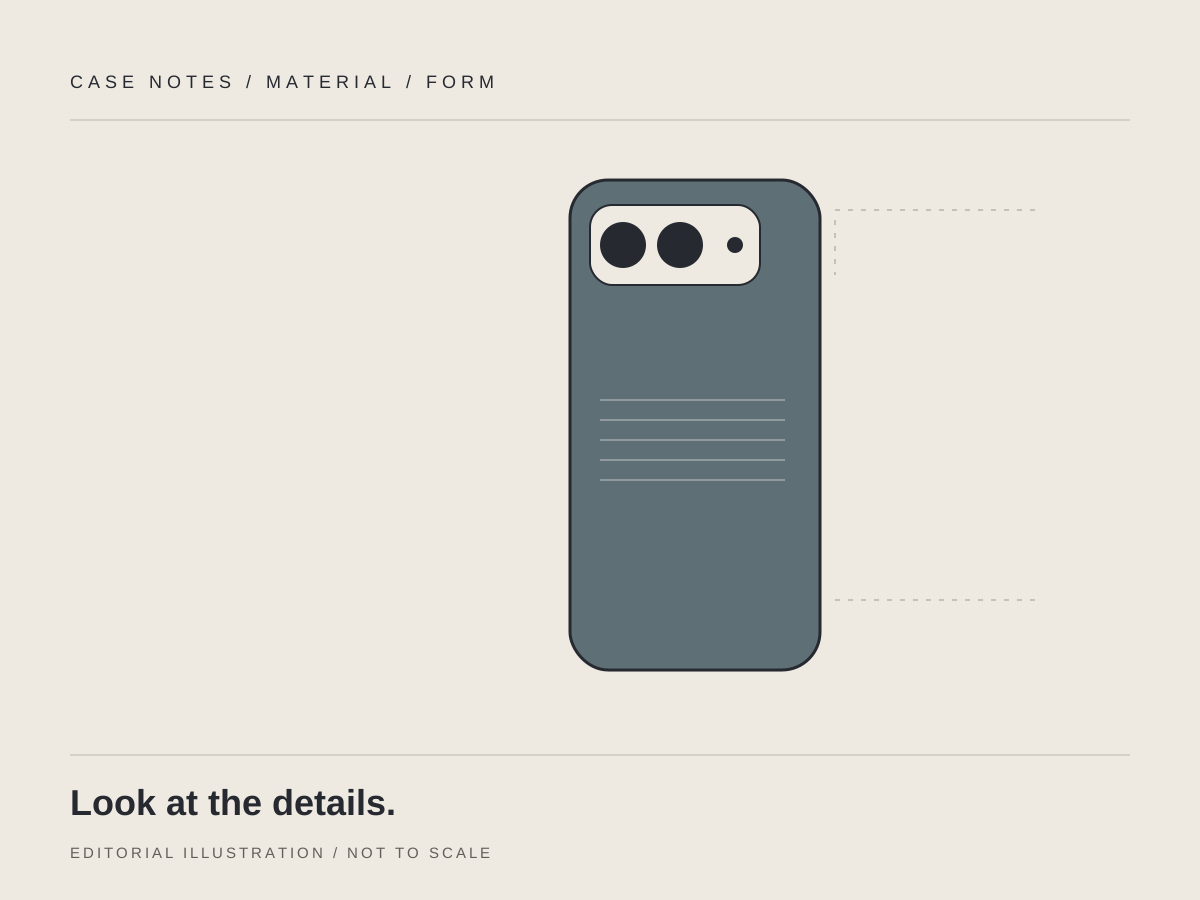
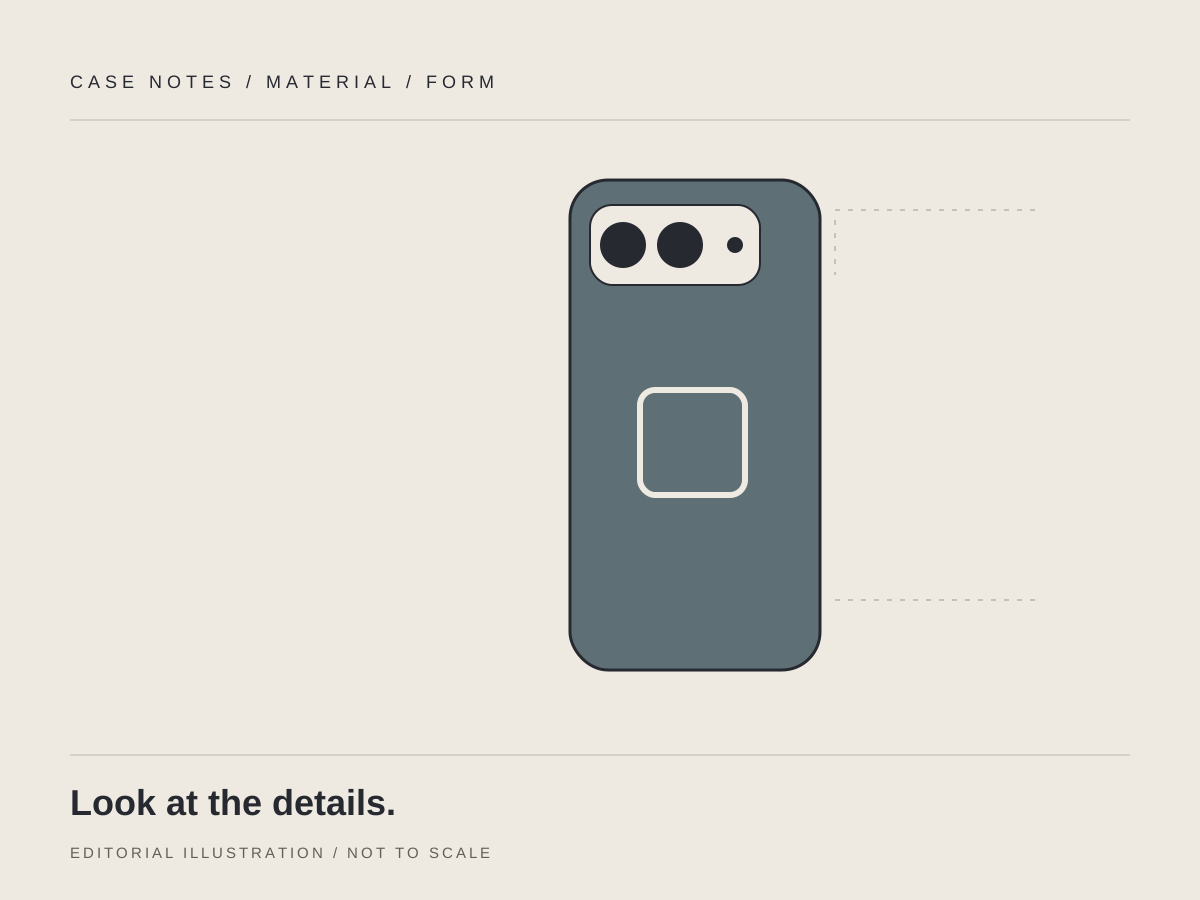
A finished case hides most of the work that made it. The shape looks simple, but the route from a drawing to a usable object brings together geometry, material choices, tooling and inspection. This is a starting map of that process, with the details that deserve a closer look.
Start with the exact phone
The first useful question is which device the case is being designed around. Camera openings, ports, controls and clearances all belong to that exact model. A screen-size label leaves too much out. Apple's drawings and accessory guidance provide a documented reference; physical fit still needs checking on the device.
Reference: Apple accessory design guidance.
Choose the construction before the finish
A case can combine a rigid back, a flexible perimeter, a surface layer and separate button parts. Other designs use a much simpler construction. These are different engineering choices, not a universal recipe. Before describing a product as a single material, ask which part the description refers to. A leather surface, for example, does not describe the entire structure underneath it.

Turn a material into a repeatable shape
Thermoplastic components can be formed using injection molding. The tool defines the geometry; the material grade and processing conditions affect the result. Silicone systems and decorated surfaces can need different processes. We will document each product's actual route when the manufacturer provides evidence, rather than treating every factory as though it works the same way.
Reference: Covestro TPU material guidance.
Look at the joins
The border between two materials often tells a more useful story than the color name. Look at the transition between a back panel and its frame, the edge of a covering and the way separate controls are retained. A macro photograph can show a join. It cannot establish the adhesive specification, bond strength or long-term durability by itself.
Add the parts you rarely see
Some designs incorporate magnetic components, liners or separate control interfaces. An external ring is not evidence of a charging certification. Those claims need their own documentation. For Camera Control, the intended interaction matters as well as the visible opening or cover.
Reference: Apple accessory design guidance.
Inspect the object that actually ships
Our proposed review process records the exact case, its version and the phone used. It checks mounting, removal, access to ports and the controls before moving to measurements or use over time. Factory inspection and an editorial review serve different purposes; a manufacturer claim will remain attributed until we have evidence for our own conclusion.